
Blossoms of Tanzania: 10 flowers to discover during your safari
Tanzania’s vast savannahs are known worldwide, defined by towering trees, fascinating wildlife, and iconic peaks such as Mount Kilimanjaro.
Yet not everyone knows that hidden within the country’s most stunning national parks, and tucked away in its untouched landscapes, are small treasures: the flowers of Tanzania.
These bursts of color paint the scenery with vibrant, dazzling shades: from tiny, rare blossoms concealed in the mountain rainforests to giant species that bloom only at night.
Keep reading to discover 10 stunning Tanzanian flowers, whether you’re on safari, exploring forests, or trekking to the summit.
African violet (or Saintpaulia)
The African violet is a tiny flower, known worldwide as a popular houseplant. It features small, velvety blossoms of an intense blue-purple hue and fleshy leaves.
In the wild, it is very rare, growing mainly in the shade of highland rainforests, sheltered from direct sunlight. Its discovery sparked a global floriculture industry.
Flame tree (Delonix regia)
Originally from Madagascar, the flame tree is now widespread in Tanzania and is renowned for its striking red-orange blossoms that appear between spring and summer.
Its majestic canopy provides shade and shelter, which is why it is often planted along roads and in villages. Thanks to its dramatic visual impact, it has become a centerpiece of some of the most iconic landscapes during its blooming season.
Bougainvillea (Bougainvellea spp.)
Bougainvillea is not just a flower: its vibrant presence greets visitors across Tanzania.
The true flower is small, with delicate white or yellowish petals, while the spectacular bracts—leaf-like structures in vivid shades of pink, purple, red, or orange—create the plant’s striking display.
Thriving in full sunlight, bougainvillea is found everywhere, especially along the Northern Safari Circuit, where it grows as hedges or climbing vines.
Jacaranda (Jacaranda mimosifolia)
Known for its stunning bloom of massed bluish-purple tubular flowers that cover the entire canopy, the jacaranda creates a spectacular rain of violet petals on the ground beneath.
Planted as an ornamental tree, it can be seen in urban centers and residential areas where it gives the streets a magical and colorful atmosphere. Its flowering season usually heralds the arrival of the rains.
Frangipani (Plumeria spp.)
The frangipani is the very essence of tropical perfume, its enchanting scent defining coastal Tanzania and Zanzibar.
It has five waxy petals—white with a golden center or in vibrant shades of pink, red, and multicolored blooms. Cultivated in lodge gardens, courtyards, and along the coast, it blends seamlessly with the salty sea breeze, creating an atmosphere that is both exotic and unforgettable.
Hibiscus (Hibiscus rosa-sinesis)
A tropical icon of beauty, the hibiscus is everywhere, adding a splash of color to virtually any African landscape. Its large, trumpet-shaped flowers bloom in brilliant shades ranging from red and pink to yellow and orange.
The individual flowers of Hibiscus rosa-sinensis often last only a single day before wilting and falling, yet the plant produces new ones continuously throughout the warm season, ensuring a constant display of color.
Desert rose (Adenium obesum)
Characterized by a swollen stem that stores water and by showy pink or red trumpet-shaped flowers, it is highly resistant to drought and thrives in hot, sunny climates.
Typical of northern and central regions and semi-desert areas, it grows along Tarangire National Park and around Manyara, where the dry climate favors its development.
Baobab flower (Adansonia digitata)
The blooming of a baobab is a rare and magical sight.
The flower is as impressive as the tree itself, large, pendulous, waxy, and creamy white, reaching up to 20 cm in diameter.
They are especially iconic in Tarangire National Park, where hundreds of these majestic trees dominate the landscape, particularly along the Tarangire River.
Kilimanjaro impatiens (Impatiens kilimanjari)
Exclusive to Africa and endemic to Mount Kilimanjaro, this flower is a rare and unique sight for trekkers.
It can be spotted along trails such as Machame or Marangu, which pass through the montane rainforest zone, typically at altitudes between 5,900ft (1.800m) and 9.840ft (3.000m), where it grows in the shaded understory.
With its bright pink-red hue and distinctive curved yellow “tail,” it resembles a tiny orchid.
Orchids (multiple species)
Tanzania’s rainforests host hundreds of orchid species, many of them endemic. Found mainly in mountain parks like the Usambara range and the Southern Highlands, they also appear in remote forests such as Ruaha National Park and along walking safari routes.
Sensitive to environmental changes, orchids are key indicators of forest health.
What is the national flower of Tanzania?
Although Tanzania is rich in biodiversity, it does not have an officially recognized national flower.
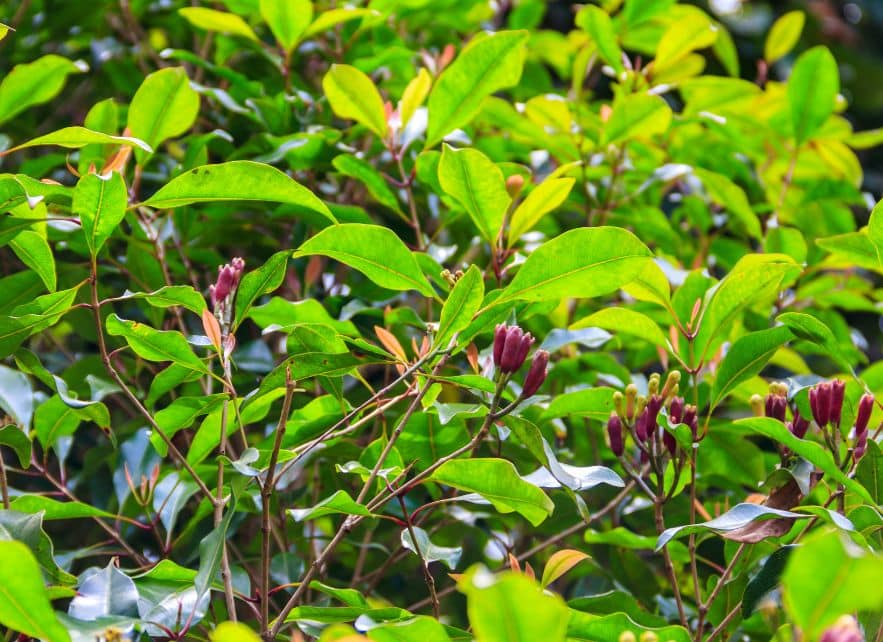
Still, the clove (Syzygium aromaticum) holds a special place in the hearts of Tanzanians, thanks to its deep historical and economic importance. For more than a century, Zanzibar and Pemba Island have been known around the world as the “Spice Islands.” Introduced in the 19th century, clove cultivation quickly became the archipelago’s dominant economic activity.
Even today, clove exports remain vital to the nation’s economy, sustaining entire communities and contributing significantly to Tanzania’s foreign exchange earnings. Found throughout the country (especially in the islands and coastal regions) the clove is cherished as an enduring symbol of Tanzania’s heritage and prosperity.
A safari of colors, scents, and discovery
With Zohar African Safaris, every journey is more than a wildlife encounter: it’s a chance to uncover Tanzania in all its dimensions.
From iconic savannahs to rare blossoms hidden in mountain forests, discover a living heritage that makes every safari richer and more colorful. If you want to capture the essence of these moments, read our safari photography guide for tips on how to make your safari unforgettable.
Book your safari today and let Zohar guide you through Tanzania’s most unforgettable treasures.