
Meeting the Hadzabe: Tanzanian’s ancient hunther-gatherers
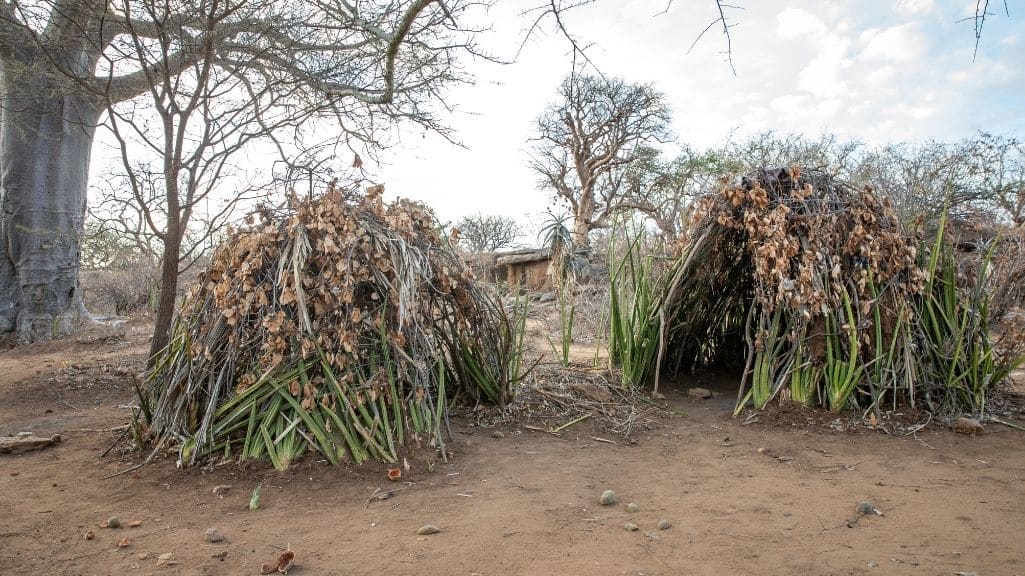
The Hadzabe are a people who, even in the 21st century, continue to live without pottery, metallurgy, or modern technology. They have always lived by hunting and gathering, without any form of authority, prohibition, or violence.
A small ethnic group of approximately 1,500 people, divided into about 200 families, living a nomadic life in search of food and water between the southern slopes of the Ngorongoro Crater and Lake Eyasi, in Tanzania.
Through this post, we will take a closer look at the Hadzabe tribe, exploring their origins, practices, culture, and language, as well as the territory they inhabit and how to experience an authentic and unique encounter with them.
Hadzabe tribe: an ancient way of life without hierarchy
Hadzabe is the name used by the community to identify themselves. They do not live in permanent settlements: instead, their movements are driven by the need for food and water, reflecting a way of life deeply connected to nature and its rhythms.
They are also known as “bushmen” because of their close connection to the bush, a label imposed from the outside. They do not identify with this term, as it does not reflect their cultural identity.
In East Africa, they are among the last communities whose way of life remains closely tied to hunting, a practice that has sustained them for thousands of years. Alongside gathering, hunting has shaped their diet over the centuries and influenced both their social organization and worldview.
The chaaba is the hunter of the tribe, responsible for providing food for the group. He uses bows and poison tipped arrows, relying on techniques passed down from one generation to the next. The role of the chaaba is not associated with authority or power, but rather with a strong sense of responsibility toward the community.
Often cited by scholars, the Hadzabe are known for the continuity of their way of life, which has remained largely unchanged for thousands of years. The absence of leaders is a distinctive feature that breaks with an almost universal pattern. Over time, most societies develop hierarchical structures; the Hadzabe do not.
In their case:
- there are no formal chiefs or permanent leaders;
- no one exercises power over others;
- decisions are made collectively;
- influence comes from experience rather than authority.
Culture, tradition and language of Hadzabe people
The traditions of the Hadzabe, deeply connected to the environment and nature, have been passed down orally over the centuries.
There are no codified laws or formal rituals; knowledge is transmitted through experience, storytelling, and careful observation.
Beyond hunting, daily life revolves around shared moments of conviviality, including food, storytelling, and traditional songs. Singing plays a central role in the social life of the tribe and is often used as a form of emotional expression and group cohesion.
There are no formal authority figures, but healers and shamans, and roles are divided between men and women. Men make bows and arrows and devote themselves to hunting, often accompanied by small, light colored dogs. Women, on the other hand, gather tubers and wild plants and are responsible for making baskets, shelters, clothing, jewelry, and decorations.
From a religious perspective, there is no structured one, but rather a worldview centered on nature and its living presence, which is fundamental to daily survival. The Hadzabe language is a linguistic isolate and uses several types of click consonants. These are consonant sounds produced through movements of the tongue and used as distinctive elements of the language.
What do Hadzabe people eat?
The Hadzabe diet largely depends on hunting and gathering. When meat is not available, their diet is based on baobab fruit, berries, roots.
Typical foods include meat prepared immediately after the hunt, often roasted over an open fire, as well as wild honey. Collected directly from natural hives, wild honey is one of the main staples of the eating habits.
The tribe does not practice animal husbandry or store food supplies. Concepts such as private property and accumulation are not part of their culture: food and the few goods available are shared within the group.
For a deeper look into the Hadzabe diet and traditional food, we invite you to read our dedicated article on Tanzanian food.
Would you like to have a Hadzabe tribe experience?
Experiencing an encounter with the Hadzabe means truly connecting with one of the most fascinating peoples of East Africa.
Zohar African Safaris organizes personalized visits that allow for authentic and respectful encounters. During these experiences, you will immerse yourself in the daily life of the Hadzabe, observe their gestures and traditions, visit their traditional shelters, and connect with a way of living shaped by nature and time.
Guided and conscious, it is a human encounter that leaves space for listening and mutual understanding.
Meeting the Hadzabe is not just a visit, but a moment of connection that stays with you. It is an invitation to slow down, observe, and understand a way of life in harmony with the environment.
From this experience, you can go on to discover other tribes of Tanzania, creating a journey made of authentic encounters, diverse cultures, and stories that deserve to be heard.