
Beyond “jambo”: a US traveler’s guide to Tanzanian languages
You’ve broken in your hiking boots, double-checked your down jacket for the summit, and your bags are packed for the Serengeti Park. But as you prepare to step off the plane into the heart of East Africa, there is one piece of “gear” that is often overlooked: the language.
Tanzania is the most linguistically diverse country in East Africa, home to a staggering number of distinct ethnic groups, with over 120 languages. While English is a de facto official language widely used in tourism, understanding the linguistic landscape is your true key to moving from a “tourist” to a “traveler”.
The rhythm of the land: from mountains to savannas
If your journey begins on the slopes of Mount Kilimanjaro, you are walking through the ancestral home of the Chagga people. Their language, Kichaga, is deeply intertwined with the land, encapsulating generations of knowledge about the coffee and bananas that flourish on the mountain’s fertile base.
While your guides will speak fluent English, you will inevitably hear, and must live by, the Swahili phrase Pole pole (slowly, slowly). It is more than a greeting; it is the essential mantra for acclimatization and reaching the summit.
As you descend from the clouds toward the Great Rift Valley and the northern safari circuit, the soundscape changes. Here, you’ll encounter the Maasai, whose language is properly called Maa.
Despite the rise of global languages, the Maasai have vigorously maintained their tongue as a vessel for their oral literature and nomadic values.
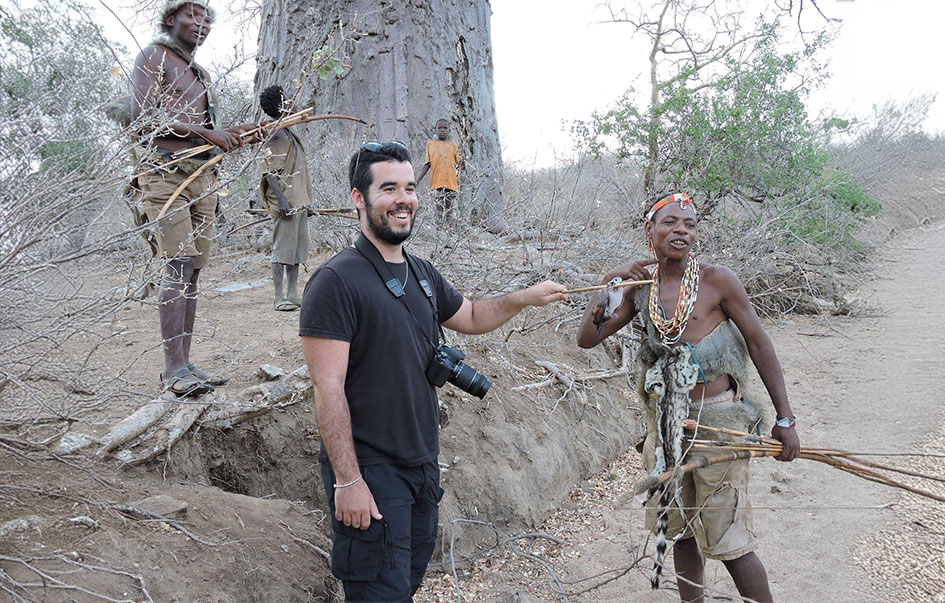
For a truly ancient connection to the land, listen for the click consonants of the Hadza and Sandawe hunter-gatherer communities—dialects that represent some of the oldest linguistic traditions on the continent.
Swahili: the national handshake
While you may hear Sukuma (spoken by Tanzania’s largest ethnic group) or Haya near Lake Victoria, nearly everyone you meet will speak Swahili (kiSwahili).
This isn’t by accident.
Upon independence in 1961, Tanzania’s first president, Julius Nyerere, promoted Swahili to ensure that no single ethnic group would dominate the new nation. Today, while only about 10% of Tanzanians speak it as their first language, roughly 90-95% use it as a common bridge to connect their diverse cultures.
For the American traveler, using Swahili is the ultimate sign of respect. Tanzanians are famously welcoming and are often curious and delighted when you mix a few Swahili words into your sentences.
Etiquette for the meaningful traveler
To navigate your interactions with grace, keep a few “social rules” in mind that you won’t find in a standard dictionary:
- respect the hierarchy: if you meet an elder, use the respectful greeting shikamoo. For peers or younger people, a casual “mambo” or “jambo” is perfect.
- the peaceful response: when asked how you are doing (habari?), the standard, peaceful response is “salama“.
- find common ground: if you find yourself in a conversational lull, bring up football (soccer) or local beers like Kilimanjaro or Serengeti—they are universal icebreakers in any Tanzanian town.
Connecting through the local economy
One of the best ways to practice your new vocabulary while making a positive impact is to move away from “voluntourism” and instead support the local economy directly. Spend your time and your Swahili at local stalls. Buy your souvenirs from local craftspeople and treat yourself to a chipsi mayai from a street vendor.
By learning the basics of the national tongue and recognizing the deep roots of the 120+ ethnic languages, you aren’t just observing Tanzania through a lens; you are participating in a culture that has used language as a tool for peace and unity for over sixty years.
Quick pocket guide: essential Swahili for the road
You don’t need to be fluent to be polite. While English will work in your hotels and lodges, these phrases will open doors (and smiles!) when you are exploring local markets or meeting your guides.
| Phrase (Swahili) | Pronunciation | Meaning | Context / When to use |
|---|---|---|---|
| Mambo / Jambo | Mam-bo Jam-bo |
Hello / hi | Casual greeting for friends or people your own age. |
| Shikamoo | Shi-ka-mo | Respectful greeting | Used strictly when addressing elders. |
| Marahaba | Ma-ra-ha-ba | Response to shikamoo | Reply given by elders. |
| Salama | Sa-la-ma | Good / peaceful | Standard reply to “Habari?”. |
| Pole pole | Po-lay po-lay | Slowly, slowly | Common phrase in daily life and hiking. |
| Asante sana | A-san-tay sa-na | Thank you very much | Use generously in daily interactions. |
| Karibu | Ka-ree-boo | Welcome | Also means “you’re welcome”. |
| Tafadhali | Ta-fa-dha-lee | Please | When requesting something politely. |
| Samahani | Sa-ma-ha-nee | Excuse me / sorry | Useful in crowds or when apologizing. |
| Chipsi mayai | Chip-see my-eye | French fry omelet | Popular street food dish. |
Your words are your bridge
As you pack your bags for the flight home, you will likely carry souvenirs: Makonde wood carvings, Tanzanite jewelry, or perhaps thousands of photos of the big five. But the most authentic souvenir you can take with you is the connection you fostered through language.
Tanzania is a nation that chose unity over division, weaving together its ethnic threads into a single national tapestry through Swahili.
When you step out of the safari jeep and clumsily attempt a shikamoo to an elder, or joke about the pole pole pace with your mountain guide, you aren’t just communicating; you are participating in the living history of the country. You are validating a culture that values respect, community, and peace.
So, don’t worry about perfecting your grammar or memorizing a dictionary. The goal isn’t fluency; it’s friendship. By learning the language of the land, you ensure that you weren’t just a spectator looking in, but a guest who truly said hello.